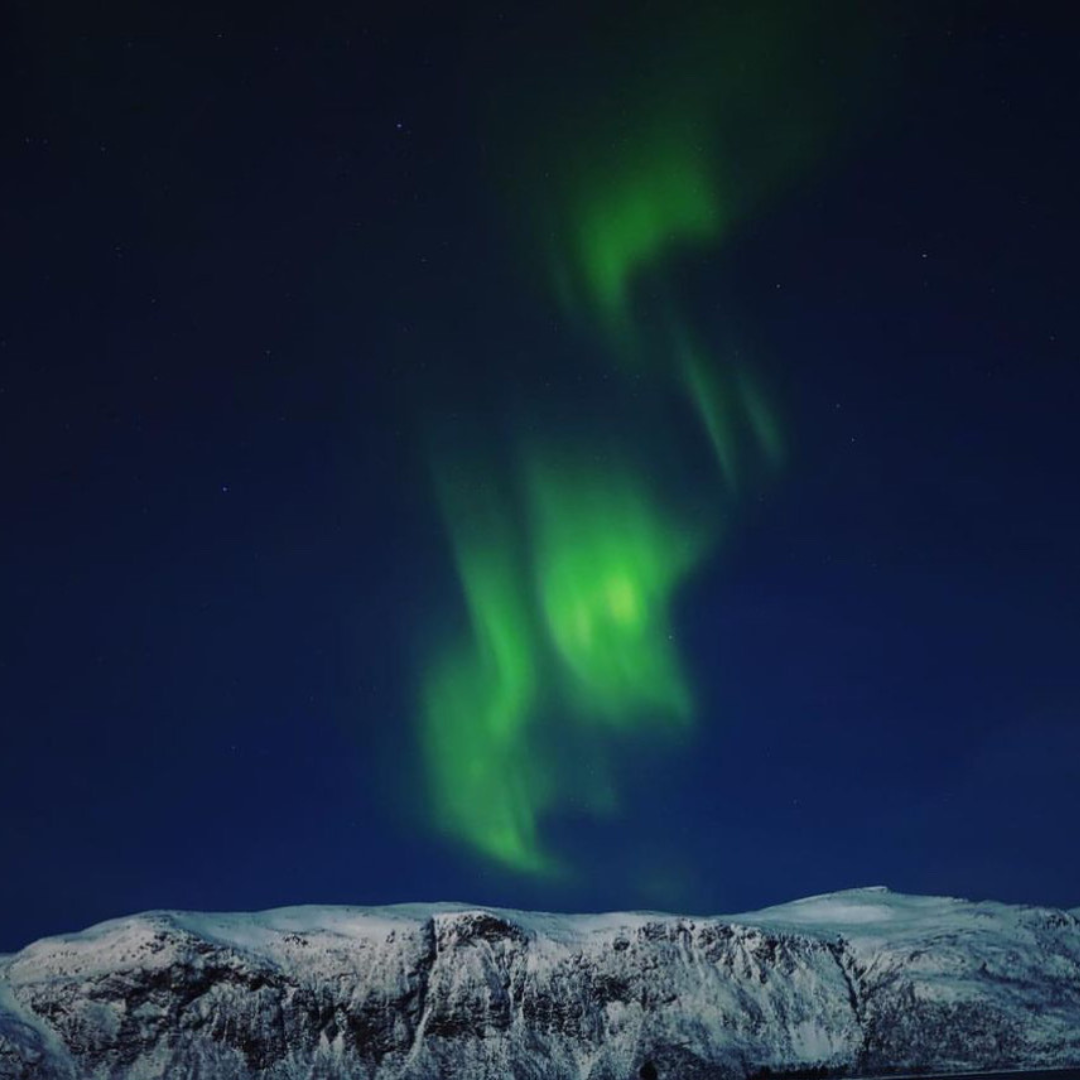
From December to March, we noticed that many of our shop's customers organize trips to see the Northern Lights.
What kind of clothing should you wear to enjoy this show in complete peace and comfort? Here are some suggestions.
- First layer: technical underwear is the most important choice to pay attention to. Therefore, a synthetic or merino wool thermal shirt that guarantees comfort between -10° and +10°. This will ensure optimal thermoregulation during the temperature variations of the days you'll be visiting. Underwear also includes tights if you don't have technical winter mountain pants.

- Second layer: The second layer, for the top, can be a fleece between 200 and 300 grams thick or a good wool or cashmere sweater. For the trousers, a good pair of technical mountain trousers, stretchy, windproof, and water-resistant (NOT Gore-Tex), is a good choice. If the trousers have internal padding, that's fine; otherwise, you can wear tights.

- Last layer: a padded and waterproof technical jacket, preferably a mountain brand, so that it's lightweight yet warm. This will aid breathability and ease of movement.
- Shoes: Hiking shoes, preferably mid-heeled (a little high), but low-heeled shoes are fine if necessary. Waterproof! You can also opt for snowshoes, similar to hiking boots but with insulation. This last option, however, will only tie you to the experience of traveling in a snowy "place," while hiking shoes, with a good, thick, warm sock, will do the trick for the Northern Lights experience and you can then use them for other trips or excursions.
- Essential accessories: warm but not too bulky gloves (no ski gloves), warm technical mountain socks (with a high percentage of polyester or merino wool), a warm but especially windproof hat. Headlamp. Hand warmers. Thermos can be useful for carrying hot drinks.


These are general tips to help you choose the right equipment. Naturally, more specific advice will be provided on a case-by-case basis for your specific needs.
For this article, I asked a BF Mountain friend, Roberto Villani , to participate. He's traveled to see the Northern Lights twice. I asked him a few questions about his firsthand experience, so it might be useful to others too! The interview is below:
- BF: Hi Roberto, you're one of the lucky ones to have seen the Northern Lights! Can you tell us which year and where you saw them?
- A: I've seen the Northern Lights on two separate occasions. In 2018 and 2019. Both times, I went during what is known in Scandinavia as the polar night. A period of "darkness" that lasts from November to March.
Photo courtesy of Roberto Villani
- BF: What time of year did you go? Or rather, what season did you find there and what kind of clothing did you bring?
A: As I was saying, I went during the polar night and chose that month both years. It was midwinter, therefore, but since it was above the Arctic Circle—I was in Tromsø, Norway—it had already been winter for a while. My clothing was chosen with excellent advice from BF Mountain because it was my first time in such a cold climate, and my first priority was to wear boots, with the option of attaching small crampons, because icy roads are especially dangerous for pedestrians. So, a good pair of Salomon boots and the rest of the gear you normally wear for a day in the mountains, even here in Italy. This is because, despite the very low temperatures, I found it dry and cold, but gloves and a hat are a must.
Photo courtesy of Roberto Villani
- BF: What would you have liked to bring that you didn't in your outfit selection? Or more generally, what advice would you give to someone going through this experience?
- A: A signal light like the ones miners use. At those latitudes, it's always dark during the polar night, a small glimmer of light between noon and 2 p.m., then the darkness returns quickly, as we experience it after 10 p.m. A light is needed, above all, to see and be seen. I noticed and immediately purchased some LED headband lights that locals, especially schoolchildren, cyclists, and the elderly, wear on their arms so they can be seen by motorists.
Photo courtesy of Roberto Villani
- BF: What else would you recommend to best admire this natural spectacle?
- A: Download one of those apps to check the weather and how bright the aurora will be, because only if the sky is clear can you see the Northern Lights. If it rains or the sky is overcast, you'll spend hours waiting for the wind to clear the clouds. And hours in the cold because they don't always appear, because as we all know, it depends on the sun, which paradoxically isn't visible during the day!
- BF: Did you organize everything yourself or did you rely on a travel agency?
- A: Nowadays, with various platforms, you can organize trips anywhere on your own. I always prefer to do it this way. Only if I have to go to high-risk areas do I prefer an agency.
- BF: You're a photographer. How did you feel photographing the landscapes on this trip and capturing the Northern Lights?
- A: Photographer is a big word; I'm a photography enthusiast and try to take pictures wherever I go. I love local markets, and on every trip I go to one to take pictures. The aurora bore me a special mention, so I armed myself with my cameras—a good, wide-angle lens with a wide aperture—an f/1.8 is fine, but even a 2.8 is fine. I also took pictures with a GoPro 5 for the first time. In short, if you're planning on photographing the aurora, having the right photographic equipment and clothing are essential.
Photo courtesy of Roberto Villani
------
The BF Mountain staff would like to thank Roberto so much for his valuable contribution and for the photos he provided! We invite you to visit his Instagram page to admire his photos! Link to Roberto's Instagram page > https://bit.ly/3Iof6eq
- If you're taking this trip, stop by BF Mountain for some advice on what to wear!