
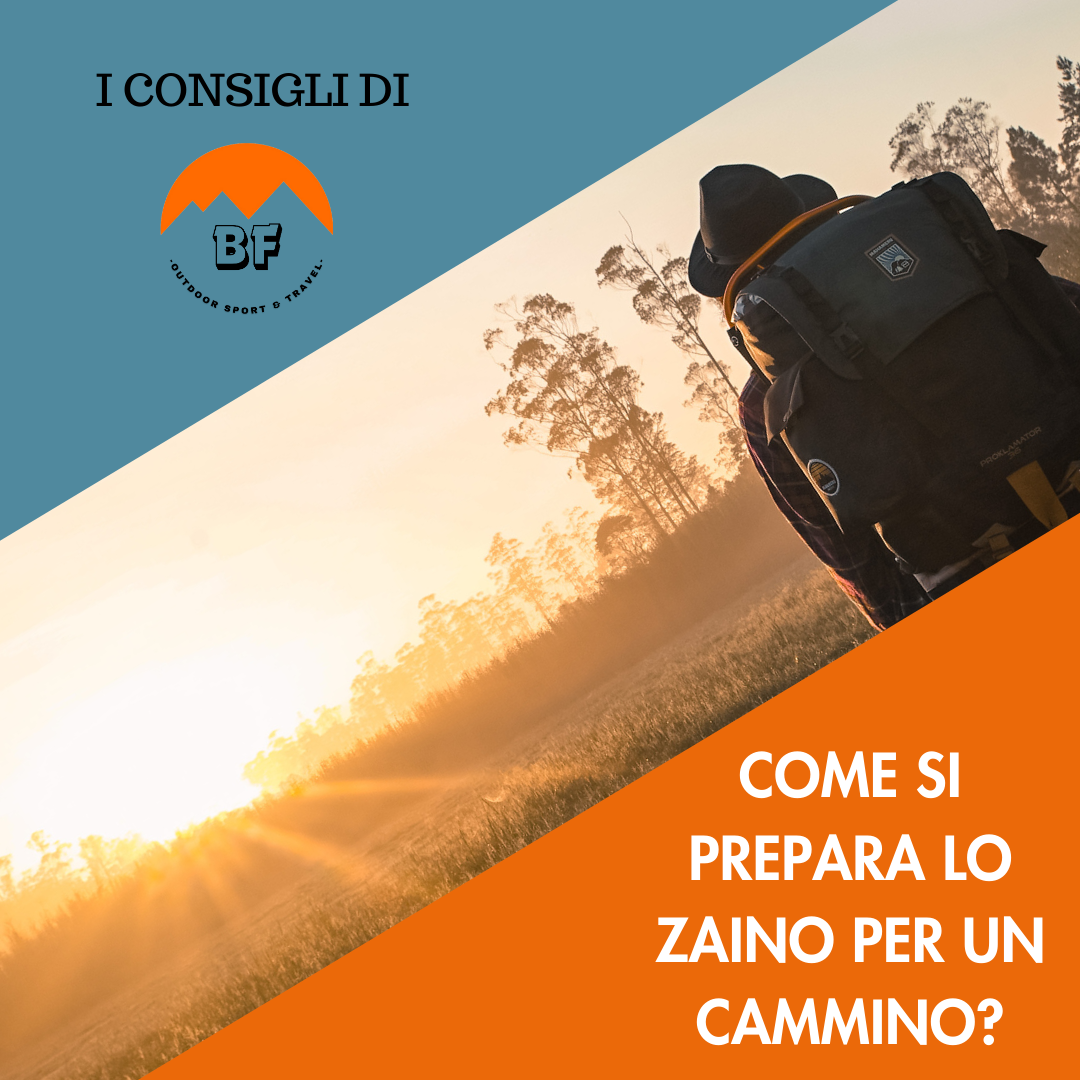
Preparing your backpack for a Camino, whether long or short, is the most important part (along with your shoes) to take care of. Here are some tips!
THE BACKPACK:
The first challenge you face when choosing a backpack or choosing one from those you already own or borrow is: how big should it be (how many liters)? It depends on many factors. But getting down to brass tacks will depend a lot on whether you're hiking in summer or winter. In winter, it should be larger because you'll be carrying bulkier gear, while in summer, it can be smaller because your clothing is much more basic.
It will also depend on how long the trek is, but whether it's 3 days or 30 days, if you adopt the right mindset— that is, washing your gear often—a trek lasting several days or months can easily be scaled to a "normal" liter. For the record... if you're planning a trek lasting several days, I think you'll be wild enough to understand that you'll need to wash your gear often!
The ideal capacity for a hike on marked trails, even with elevation gain, in a mountain or medium-mountain environment is around 40 liters. This could be 10-15 liters more if we're hiking in winter and want to be completely self-sufficient (tent, stove, etc.), or 10 liters less if we're hiking in warmer weather. Make sure your backpack has external straps so you can stow your tent without taking up internal space. Otherwise, everything changes! But I'm still hard-pressed to imagine a modern backpack without external straps.
How do you figure out the volume yourself? Get a large enough bag, about 35-40cm wide, and transparent so you can see how everything fits inside. Start by packing all your clothes in an orderly fashion, but first place a spare pair of shoes or sandals at the bottom. Finally, add all your accessories. Now, if you already have a backpack, try stuffing everything inside and see if it fits. If it fits, you're good to go. If you don't have a backpack, go to a specialized store, like BF Outdoor SHOP , bring your bulky items, and try stuffing them into backpacks until you find the right one!
The clothing we will bring that will fill our backpack should be composed of the following:
- Technical clothing : Breathable T-shirts, trekking trousers, technical socks.
- Additional layers : More or less light fleece depending on the season, waterproof/windproof jacket.
- Hat and sunglasses : Sun protection is essential, especially in the warmer months.
- Comfortable shoes : Hiking boots or walking shoes suitable for the terrain. This is another very important choice that we'll address in another article!
Equipment:
- Sleeping bag and mattress : If you plan to sleep in unconventional accommodations.
- Trekking poles : Useful for supporting the knees and aiding in walking.
- Flashlight or headlamp : For moving around at night or in dimly lit places.
Personal care:
- First aid kit : With plasters, disinfectant, essential medicines.
- Personal hygiene : Toothpaste, toothbrush, soap, microfiber towels.
- Sunscreen and lips : Sunscreen is essential, as mentioned above. Hat and sunscreen: always!
- Insect repellent : Depending on the season and the areas you will be crossing.
Other useful elements:
- Gloves and scarf : For the colder days.
- Water bottle : Hydration is essential, and you should always carry at least 1.5 liters of water per day/walk. Drink often and in small amounts! Avoid walking for hours without drinking!
- Map or route guide : To orient yourself and plan your stages.
Additional tips:
- Lightweight : Try to keep your backpack light, carrying only the essentials but packing it completely without leaving too many empty spaces. So, the better you are at choosing ultra-compact, lightweight clothing and packing just a few pieces, the more you'll be able to opt for smaller backpacks!
- Test Ahead : Try on your gear before your hike to make sure it's comfortable and functional.
- Stage Planning : Divide your route into stages and plan stops for rest and food.
- Sharing : If you are walking with someone else, distribute the equipment evenly among the participants.
- Flexibility : Be prepared to adapt your gear and strategy based on weather conditions and your energy level.
A Ferrino model we recommend because it has all the capacity you need for various needs, including multi-day hikes, winter hikes, and summer hikes where you'll need to be especially careful about carrying the essentials: the FINISTERRE model! Here's the link to the website : https://bit.ly/3y6id6T

Packing your backpack for a hike requires care and attention to detail, but with the right planning, it can be a rewarding and unforgettable experience.
Have a good trip!