
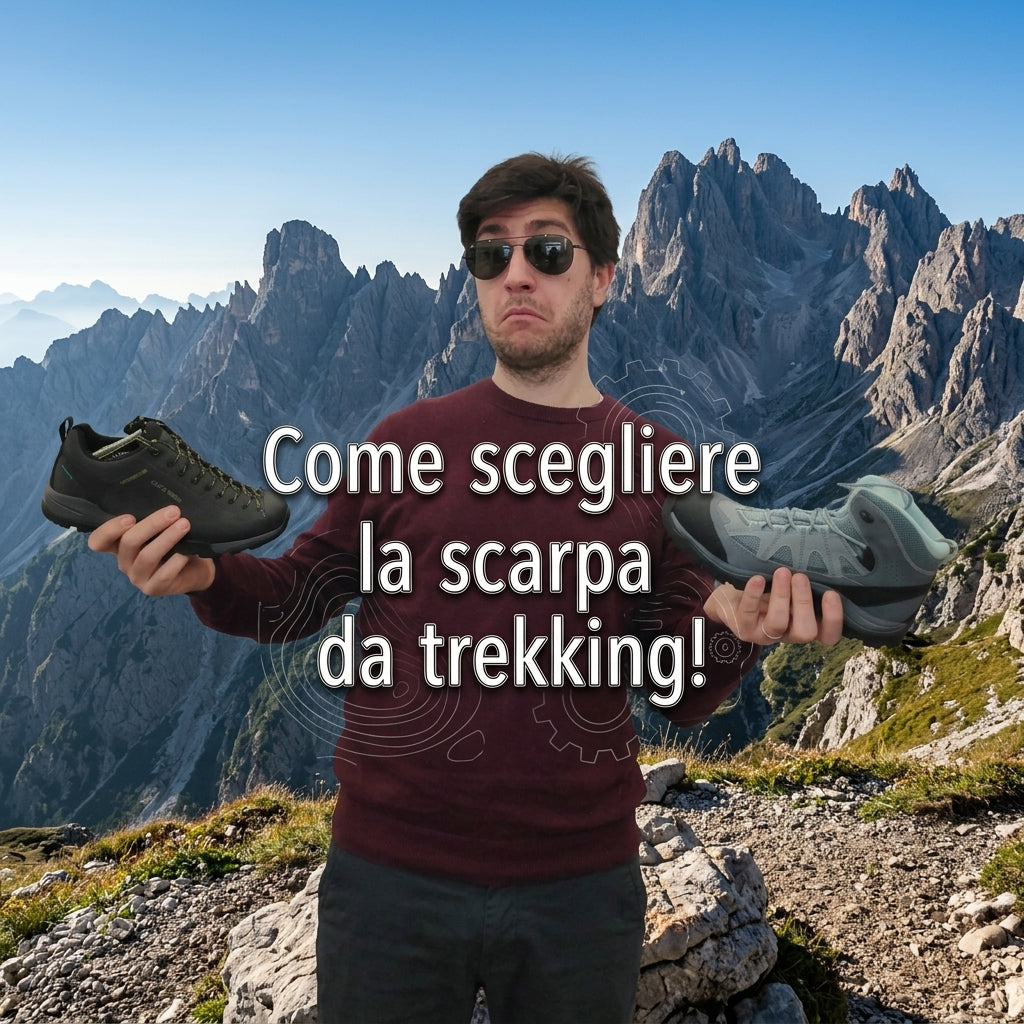
Today I want to share with you my practical tips on how to make the right purchase for your excursions, whether it's your first pair of hiking boots or your tenth!
1. Physical Store vs. Online Purchase: Where to Buy?
In the age of smartphones and one-click purchases, buying online has become incredibly simple. However, when it comes to a mountain boot, the ideal choice remains the specialized physical store.
Here's why a physical store offers an unbeatable advantage:
-
Personalized advice: A specialized technician analyzes your specific needs, foot shape, and the type of trails you plan to tackle.
-
Added value without crazy costs: Trekking boots are not bought every few months (as is the case with running shoes). Since it's a long-lasting purchase, online savings are often minimal compared to the value of good advice.
-
Reviews and reliability: Before visiting a store near you, you can check online via Google for reviews from other customers to verify the professionalism and care of the business.
2. Tips for First-Time Hiking Boot Buyers
If you're new to the world of trekking, the right boot shouldn't be too demanding or too stiff. It should be a versatile, medium-soft model capable of protecting you from hazards or fatigue.
3. How to Choose Boots if You are an Experienced Hiker
For those who have already worn out several pairs of boots, priorities change. Perhaps the models used in the past are no longer in production, or your needs regarding weight, terrain type, or foot shape have changed (for example, if you switch from challenging mountaineering activities to more relaxing and scenic routes).
In this case, based on your personal taste (classic leather, suede, or technical fabric) and a direct comparison with an expert in the store, you will be able to find the ideal balance between confidence, stiffness, and comfort on various types of terrain.
4. Golden Rules for Fit and Comfort
The main secret to never making a wrong purchase is just one: comfort must be immediate. The boot should not require months to become comfortable; the feeling on your foot should be pleasant right away.
-
Choose one size up: Hiking boots should generally be roomier than your everyday footwear, to allow for technical socks and prevent impact when descending.
-
Heel stability: The back and ankle must be well-wrapped, firm, and stable.
-
Toe room: Your toes must have full freedom of movement at the front. Under no circumstances should they touch the inside tip of the shoe.
-
No pressure points: Try the footwear on for a long time in the store, walk around in it, and check that there are no discomforts or compressions on the sole of your foot.
I hope these tips are useful for your next purchase and your next mountain adventures! Remember to take all the time you need when trying them on in the store: the right shoe will make all the difference with every step you take.
Useful Resources and Video Insights
If you want to delve deeper into the topic before your next purchase, I invite you to also check out these related contents on the channel:
-
How to choose the right size for hiking boots: A step-by-step guide to finding the perfect size and fit.
-
Guide to waterproof membranes (Gore-Tex and alternatives): How they work and how to care for them over time.
-
Technical mountain socks: Why the right sock is as important as the boot.
Subscribe to the YouTube BF Outdoor Sport & Travel channel and activate the notification bell so you don't miss upcoming videos and technical reviews dedicated to the outdoor world!